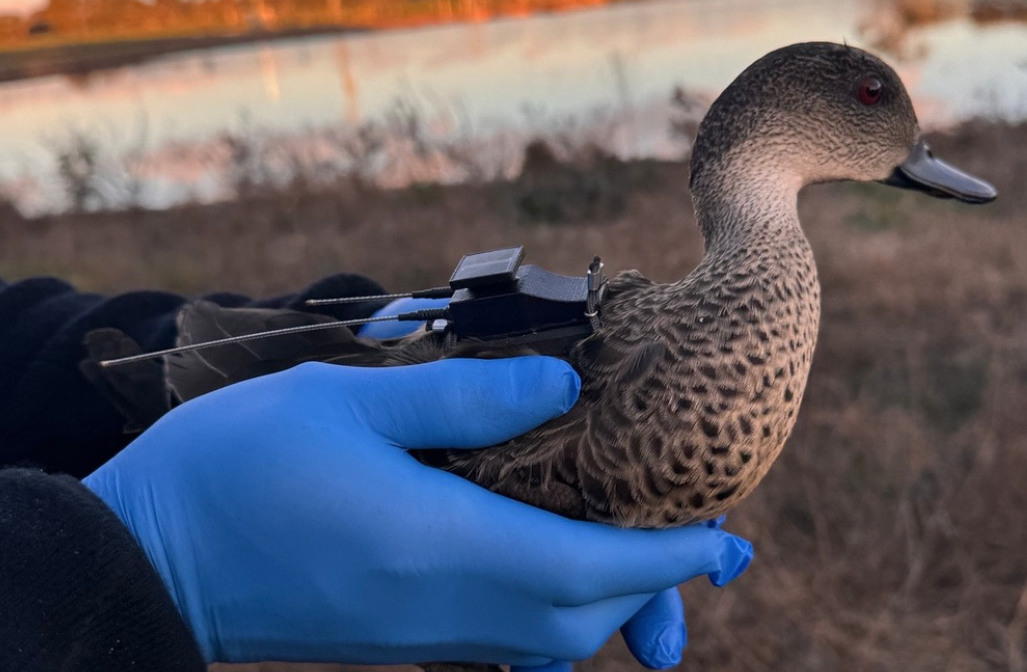
150 ducks now tracking across Australia in major movement study
24/07/2026
An important milestone has been reached with more than 150 Victorian game ducks now fitted with tracking devices as part of the largest study of duck movement and survivorship undertaken in Australia.
An important milestone has been reached with more than 150 Victorian game ducks now fitted with tracking devices as part of the largest study of duck movement and survivorship undertaken in Australia.
Since June 2025, the Game Management Authority and Deakin University have been attaching small solar-powered satellite tracking devices to four game duck species (Pacific Black Duck, Australian Wood Duck, Grey Teal and Chestnut Teal) to better understand their movements, survival and behaviours.
Data collected up to January 2026 from 62 tracked ducks shows that most individuals remained relatively close to their capture locations. However, there were a few interesting exceptions.
None of the tracked Wood Ducks moved more than 50 km from their capture and release sites. In contrast, a small number of Pacific Black Ducks, Grey Teal and Chestnut Teal undertook long-distance nocturnal flights of more than 200km to potential breeding areas.
The longest recorded movement to date was by a Pacific Black Duck, which travelled 470 km north of where it was captured, into New South Wales.
These movements suggest a spatially complex population structure.
GMA Research Principal Dr Jason Flesch said, “This early data is providing important information on duck behaviour and ecology, including valuable insights into their activity patterns, breeding and survival rates.”
“These insights are improving our understanding of how game ducks respond to seasonal and environmental changes across Victoria. The information will help guide Adaptive Harvest Management, supporting responsible and sustainable duck hunting into the future.”
The three-year project is well on its way to reaching its target of fitting 400 ducks with trackers. Sixty-two were fitted in the first six months of the project and almost 90 trackers have been fitted so far this year. This already makes it the largest tracking study on Australia’s game ducks and more than 200 more trackers are still to be deployed.
An important secondary part of the program is to take samples from each duck to test for important zoonotic diseases, like avian influenza and Japanese encephalitis. This surveillance helps authorities detect the disease early, respond quickly to any potential outbreaks, and reduce the risk of these diseases spreading.
The research began in June 2025 and will continue to 2028. The final results will be published in a technical report following conclusion of the research. Manuscripts will also be submitted to peer-reviewed scientific journals.
Follow the progress of the research, see where the ducks are travelling, watch interviews with the researchers and get more information about the project, visit Tracking Victorian game ducks website.